Saturday, 25 May 2013

Surname Saturday & Sorting Saturday - Orlando One Name Study

Prompted by a combinations of discussions on the Guild of One Name Studies closed mailing list and the newly created and very popular The Organised Genealogist Facebook Group in addition to tackling a substantial pile of filing I thought I would share this post.

I host, as perhaps you are aware, two One Name Studies. The first study registered with the Guild of One Name Studies was Orlando, which is an Italian name. Over the last 10 year I have gathered quite a bit of information, some I had recently rediscovered and some was already filed.

As I sat filing and pondering yesterday I realised that I was not happy with my current structure. Paper is fine, but I really want to utilise online facilities too and share the data.

As one would expect the occurrences of the name Orlando is minimal in the UK and quite simply the spreadsheets are divided into
  • Parish Records - Births, Marriages & Deaths - any date 
  • Civil Registration 1837 - current day
  • Cemetery Records & Monumental Inscriptions
  • Directories and Occupations
These are not exhaustive, but you get the idea.

The most occurrences of the surname are in Italy, followed by the United States and that is where the problem starts.

Do I index by State or by record type?

Currently I hold
  • Births, Marriages and Deaths across a variety of States
  • Cemetery Details
  • Military Details
  • Naturalisations
  • Directories & Occupations
Again, these are not exhaustive and I am sure you get the idea.

I want to get the data under control, before I can extract any more details and I am wondering what others think.

Any thoughts or remarks are welcome!

Sepia Saturday 178 - Eyes, windows to the soul

The moment I saw this week's theme I knew exactly what photos I was going to share.

The two photographs are of the same lady, Emma Jane West nee Ellis. Emma Jane was the daughter of Henry and Caroline Harris nee Ellis and was born to the couple just after they married in October 1844.

The first picture (left) shows Emma Jane as a young woman. There is something very appealing with this photograph. Emma Jane married her Cousin William Arthur West, a widower in 1897 and I think this photograph dates from around that time.

The second photograph is of Emma Jane around the period of the end of the First World War. Emma is wearing a locket with a photograph of her son, William James West born in 1898. William sadly died in France in 1918 just two months before the First World War ended. If you look very carefully, you can just make out the picture of William James.


Incase, though you can not see the photograph clearly of William James, here is is. This photograph dates from before William sees the horrors of France. He was so young.


Taking part in Sepia Saturday

Thursday, 23 May 2013

Treasure Chest Thursday - The Spectator 1712 - 1713


This lovely book is 300 years old. Isn't that fabulous. Not in the very best of conditions, but that is OK with me!


At some point over the last 300 years it has experienced damp and obviously endured some water spillage. I purchased this in the Spring of 1997 and since I owned it it has lived in our breakfast room display unit away from direct sunlight or heat.

Wednesday, 22 May 2013

Family Trees

Yesterday over at the Facebook group called The Organised Genealogist there was a discussion about public trees versus private trees.

I shared the fact that I have one private tree on Ancestry with no source material. I also host the same tree with all the source material and notes on my laptop with appropriate backups. I also shared the fact that I only have one tree. Having shared those details and reading through the other comments, I might review this in the future, but I thought that I might write a blog post and here we are!

My ancestry file is kept in the last version of Family Origins. I am going to change I think, but that will not be until the later part of this year at the earliest. My tree is called Main File and has existed for about 20 years.

Main File is in two parts - an electronic version as I mentioned above and a paper version which is the evidence and proof that supports and develops the electronic file. The paper file effectively starts with me and works back through my ancestors in generation order. The paper file allows me to expand and read what information I have about an ancestor or their siblings. The electronic version does that too, but I like to see the paper!

When I started researching my husband's ancestry that was added to Main File, although his paper file is separate.

  • Main File (electronic)  
  • Main File (paper)
    • JDG - My file
    • SPG - hubby's file
Documents that do not fit into the A4 ring binder have a sheet inserted into the A4 binder with the location of the material in a large A3 binder.

The rest of my material exists in a mixture of paper and electronic versions. References that do not fit into my tree are kept in the same format in either an electronic or paper version. The format is a filing cabinet with simply A-Z hanging dividers, with each surname covered. The electronic version is a series of files on an external hard drive.

In the early stages of sorting - showing the structure

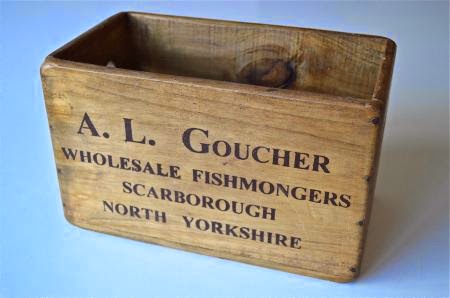
The reason for this structure is fairly simple. My maternal line is located in the United Kingdom, in what we refer to as the Home Counties - Surrey, Sussex & Hampshire. For more than 200 hundred years my family in broad terms never moved out of those Counties and frequently crossed the County boundaries. I have therefore a repetition of several surnames - Butcher, Ellis, Denyer, Earle, Harris and Holt is just a few. I even have a Goacher transcribed as Goucher on my Grandmother's line, compared to the Goucher transcribed as Goacher family that I married into. What a headache that is! In fact my own Grandparents were 6th Cousins although they never knew in their lifetimes and I wonder what they would make of that!

I also host two One Name Studies for the surnames of Orlando and Worship. The main bulk of these details are kept in a separate filing cabinet drawer, although the links to Orlando relating to me are in my Main File and the link to the surname of Worship is kept in my husband's Main File.

Information relating to my One Place Studies is held in the filing cabinet and the Puttenham material is located in the bottom drawer of a filing cabinet.

I have several family lines that spent time in India as part of the Honourable East India Company and other branches that migrated to the US, Canada, Australia and New Zealand. 

So, am I organised? - not a chance! Every day there is a reference made to a new online source, book or a thought that needs to be explored and developed and whilst that exploring is taking place the clock is ticking away merrily.

The plan over the coming months, especially with a pending house move is to reduce the pile of paper and folders left from my previous filing system to a set of nice and tidy files in the filing cabinet. Once that is achieved I plan to go back through the paper main file and transfer my material to a new piece of software ensuring gaps are noted, sources are linked and potential blog posts about specific ancestors are highlighted.

At some point I will have to be strong and stop researching, so that I can re-evaluate what material I have and what I need to do. Organising family history research is actually more important than researching. There is simply no point in continuing to gather information and do nothing with it. It's a bit like going shopping and always buying baked beans, sooner or later you will be swamped with baked beans and not much else. 

Organisation is the key to success of that I am sure.

The debate of public v private trees essentially comes down to trusting other individuals. Some researchers simply acquire others research and hard work. Some subsequently pass that research off as their own. Other researchers, and I believe the majority are honest and want to share equally their information, photos and hypothesis.

Whilst I have a tree on ancestry that is private, but shared access is given to a family member, I prefer to explore my ancestors through this blog and perhaps my web page. That works for me and enables me to share and gain interaction with other researchers.

With genealogy there is no right or wrong way on how we individually share information. The internet allows us to collaborate and explore others concepts, thoughts and by sharing that information we surely become more educated, entertained and rounded individuals, and more often than not build friendships and relationships that would not exist, or would be harder to sustain and maintain without the internet.

The internet has revolutionised the way we undertake genealogy and family history research of that there can be no doubt.

Tuesday, 21 May 2013

The Behaviour of Moths by Poppy Adams

The Sister by Poppy Adams
This was the May read for my book group and I opened the pages quite keen to get started. From the beginning I felt a sense of familiarity with A Place of Secrets by Rachel Hore, although the storyline did not share any similarities beyond the depth of research done by the authors, so just why I felt this familiarity I am not sure.

The storyline is complex and the author weaves a series of threads and genres within the pages.

The book contains four central characters, all members of one family who live in a rather large house in a large estate in Dorset. The house description was atmospheric, and built in the mid Victorian period and I could visualise a gothic looking house with a foreboding mist surrounding the building, which almost felt sinister.

The family are dysfunctional - father Clive is a self absorbed individual, a naturist and has quite a collection of moths. The research on the moths was astounding and very interesting. Mother, Maud is a troubled woman who tries to keep the family grounded and has a secret or two. The daughters, Ginny and Vivien are close as children, but as time passes by they are like strangers, which is not helped by the fact that Vivian has not been home to the family estate for around 50 years.

Each individual has their secrets and there is almost too many. There are several medical themes through the book; of mental instability, Aspergers or Autism, Alcoholism, Aging and decay, and different levels of abuse.

This is a busy novel, with lots going on and yet nothing is explained fully, which means that the reader can form an opinion about the characters and their actions.

Did I enjoy it? Actually yes, I found the detail of the moths fascinating, but wonder if there was too much detail about this. I would have liked more details of the house and perhaps definitive answers to some of the questions that the book produced.

Overall, a good read and it is hard to believe that this is a first novel for the author, who researched the various details very well. The book is cleverly written, with the decay of the house is almost reflective of the family.

Published as The Sister in the US and as The Behaviour of Moths in the UK.

Monday, 20 May 2013

Library Loot - 15-21st May

Well I have just managed to sneak in before another week passes by. In the last week I have been into the library twice. On Saturday to renew a book and I also managed to leave with another one.

On Fishing by Brian Clarke
Now this is not my usual read, but I spotted it, picked it up to see what it was about and it looked appealing.


The Sister by Poppy Adams
Then today was the monthly book group meeting. A week earlier than usual because next Monday in the UK is a public holiday.

The book we discussed was The Behaviour of Moths by Poppy Adams. We had almost a full house and whilst there was two readers who thought it was OK, but not fabulous there were some who thought it great. To see my opinion keep reading  - a little later this week the review will be up!


White Mughals: Love and Betrayal in…
Our next read is this fascinating account by William Dalrymple and is appropriately timed, given my interest in India.


I also managed to leave with these two books, one of which is a reborrow and a re read based on a few blog posts from Kristen at Finding Eliza

Trace Your Roots with DNA: Use Your DNA to…

Writing Your Family History: A Practical…


Library Loot is a weekly event co-hosted by Claire from The Captive Reader and Marg from The Adventures of an Intrepid Reader that encourages bloggers to share the books they’ve checked out from the library. If you’d like to participate, just write up your post-feel free to steal the button-and link it using the Mr. Linky any time.

Friday, 17 May 2013

The In-Depth Genealogist - Digital Magazine - Issue 4 - OUT NOW!

Picture
The next issue of the free digital magazine is available NOW!


Enjoy this digital edition of the magazine? then why not stop by The In-Depth Genealogist and read the
You can read my Introduction post HERE and you can follow the column by visiting The In-Depth Genealogist website and subscribing via email or via twitter and Facebook.

This is a great addition to the genealogy market and I am very proud to be a part of it.

Happy reading & researching!

Thursday, 16 May 2013

Treasure Chest Thursday - The Agricultural Notebook by Primrose McConnell BSc

What a great little book this is. Essentially an early 20th Century farming and agricultural labouring encylopedia. 
The first edition was published in 1883, towards the end of the Victorian era, although this 9th Edition was published in 1919.


This 9th Edition contains a dedication to the author by his father as the author died in the last months of the First World War.


I get a sense with this book, of a labourer or farmer sitting at his table pondering on the details contained within the pages.  How to grow Sainfoin (page 222), Mowing and haymaking (page 79), Ear marking of cattle for registration (page 405), Analysing cream (page 346) or the complexities of milk secretion (page 346). 

Fascinating!

Wednesday, 15 May 2013

Murder by the Homeplace by William Leverne Smith


From the back cover

"A police radio scanner call of '419' - "dead human body" - on a bucolic fall afternoon in the south-central Missouri Ozarks small town of Oak Springs sends a part-time local newspaper reporter, Penny Nixon, on the adventure of her life-time. Warned by her editor to only look for 'human-interest angles' to the story, her actions bring her perilously close to interviewing the knife-wielding perpetrator of a bizarre murder. The victim is a recently disgraced young attorney who only weeks earlier was involved in a domestic violence incident with his 'banker's daughter' bride in this quiet small town."

This week see's the launch of the book tour for the latest edition to the fictional Home Place Series by Dr Bill. 

This recent novella is set in the fall (Autumn if your this side of the pond!) of 1987, just after Back to the Homeplace

Author

Dr. Bill is a life-long learner with a passion for family history and, more generally, the social history of each of his ancestors and their descendants. He enjoys writing on various platforms and venues, including six blogs, novels, non-fiction books and ebooks, three topics published at Examiner.com .

He is author of The Heritage Tourist column published at the digital magazine The In-Depth Genealogist.

Check out Dr. Bill’s first novel, “Back to the Homeplace,” which is a family saga loosely based on my family history research and life through the years; and blog: The Home Place Series He can also be found at Dr. Bill Tells Ancestor Stories: Dr Bill Tells Ancestor Stories

Review

I thoroughly enjoyed this novella, I liked the characters; they were well developed. The central character called Penny is a newspaper reporter/freelance writer and I liked the way the storyline was written, in a conversationalist style.

As a reader it was almost possible to walk alongside Penny as she seeks and uncovers information through her interview skills. The moment I started reading the novella had a feel of Kinsey Malone from the Alphabet series by Sue Grafton and I smiled as Dr Bill threw that bit in too!

This is not feel like a regular who done it, but as a gentle mystery, as the character teases the information from her interviewees. Written in a diary style it is easy to keep track of the flow of information as the story builds.

I really must seek out the rest of the series.

Disclaimer - I was provided with a copy by the author in exchange for an honest review.

How to Write Good by John Vorhaus


How to Write Good by John Vorhaus
This is the latest read for the Progressive Book Club.

This was a quick read with only 104 pages, but this book does leave a lasting impression. A quote that I particularly liked was this one;
“These days I can’t wait to write"
The book, perhaps aimed as being inspirational was just that for me. The book steers the reader on dealing with writers block, being focused and having a plan of action.

The author uses the word whimsy, which to me means free of restraints and without fear of reprisals or alike.

Writers should write everyday, but is this the case? Isn't that bringing rules into writing? Writers should feel inspired enough to write and if they do not feel inspired today then don't write, the risk is, that perhaps tomorrow you won't feel inspired either and after a week of not writing....So is writing something that is not brilliant, in your opinion, better than not writing at all?

Having read this book I made some notes on thoughts that occurred to me.

  1. Always get dressed. As someone who in a previous working life did work from home it is a slippery slope writing in your PJs. I always got dressed into something comfy, but by getting dressed you are sending yourself (and others) a message that you are working.
  2. Forcing writing means that something you enjoyed doing becomes something that you do not enjoy. 
  3. On days when the writing does not flow are days when you can seek inspiration and explore. Often revisiting previous work or notes provides the inspiration for something else.
  4. Perfect never happens first time and I personally never get rid of a piece of work. I edit a copy, so I always have the original.
  5. Always carry a notebook & pen. Inspiration can happen at anytime and should be recorded, even if it is a series of bullet points.
So do I write everyday? Yes I do. I keep a daily journal filled with all sorts. I also try and blog everyday and  I often take part in memes, these are mainly genealogical and helps me get some focus. By reading other blogs I am occasionally inspired. I will give an example; 

I often take part in Sepia Saturday where we can share images and stories. One of the participants often makes the most wonderful collages. Which lead to someone else producing a collage. I remarked that perhaps each of the pictures should have some data attached to it. As a way of support the February Photo Collage Challenge was born and a group of us shared images and info.

For me this book is added to my writers toolbox because I liked the writing style and more importantly it made me think and reflect.


Taking part in the Progressive Book Club

Tuesday, 14 May 2013

Travel Tuesday - Top Picks - Migration

Where ever we live the in the world there is a huge amount of migration and emigration. That is not new. Whereas now we travel many miles by plane our ancestors and forebears travelled those many miles by boat.

Where ever they came from migrants bought with them bits of their culture, whether that was a recipe from another land, a bag of spices or an object or the passing down or a tradition. We now live in a true multi cultural world.

The United Kingdom is in an extraordinary position, it sits within the confines of Europe, whilst has historical links to many, many parts of the world under the then umbrella of the British Empire.

Therefore there was always going to be movement from parts of the former British Empire to the shores of the UK, but we also attracted people from all over Europe escaping persecution from their native lands.

Here is my top 10 of fascinating sites looking at migration.
  • Website - Moving Here – Explores why there was so much migration to the UK over the last 200 years. Look at the links page – lots of fascinating sites to explore.
  • Book - The Last Pink Bits by Harry Richie is a fascinating account of the British Empire, which covered a quarter of the globe and a million people when it was at its. Book published in 1998 by Hodder & Stoughton - ISBN - 978-0340666838
  • Website – Windrush was the name of the ship which brought immigrants from the Caribbean to Tilbury Docks in England.
  • Video - Windrush video located at the UK’s only digital on line TV channel
  • Website & Society - Hugenot Society – Exploring the migration of Protestants from 16th Century France to Great Britain and Ireland – Pay particular attention to the Family History section.
  • Website - Moroccan Memories in Britain
  • Podcasts – A really valuable and varied set of podcasts provided by The National Archives including how immigrants were treated during periods of War, Migration from 16th – 20th Century.
  • Website – BBC - The story of the Italians in Britain during WWII
  • Book - Italian Immigrants in Nineteenth Century Britain: Reality and Images Leicester University Press, 1988, by Lucio Sponza – This is a fascinating account of migration from Italy to Britain. The period is a bit early for my family history, but it gives a great amount of detail and is a great read.
  • Family History Societies
Have fun exploring all these fascinating migratory sources, of course there are many, many more. If you have one you recommend, why not leave a comment?

This was first published at The In-Depth Genealogist - the digi map for all genealogists.

Sunday, 12 May 2013

Sunday Salon - Check In!

It has been about 6 weeks since I posted a Sunday Salon. Where does the time go? I have been busy reading, sorting and culling ready for our house move.

Pigeon English by Stephen KelmanReading is once again my release valve and I seem to have picked up the slack of reading which is great. My local book group met as always on the fourth Monday of the month and the meeting was the discussion for the Book Pigeon English. The discussion that followed was very enjoyable and I always find it fascinating the different things each one of us takes from reading the same book.


Meanwhile, two online book groups read for April Friendship Bread by Darien Gee. I am still reading, savouring each turn of the page. The next book for the Full Bowl of Lemons book group is the Kitchen House by Kathleen Grissom which I ordered from the library and collected yesterday.  Marigold's Loft book group have selected The Color of Tea by Hannah Tunnicliffe.

I spent the rest of April participating in the A-Z April Challenge. This is the 3rd year I have taken part. The first year I was random in my postings.Each day was different . Last year I wrote about Australia, my previous trips, genealogical research and this year again was Australia based upon my trip last year. I am now pondering on what to choose for 2014. I always write my posts early which in theory gives me April to visit other participants. This year I failed miserably. The house sale and pending move along with the cull of genealogical papers, books and other items gradually taking it's toll.

Just to finish. Today is Mass Observation Study day, where those in the UK can share their daily diary and email across to the project. You can read the details HERE

Until next time!

Saturday, 11 May 2013

Ramblings from my Desk.....(12) - Dartmoor Views

We had a house viewing earlier today, which was rather handy as we had already decided to take a run out with Alfie to look at where our new home is going to be.

Alfie was quite happy in the back of our car with his bed and his toy bunny! as we travelled along the A30. The views are lovely although it was a dull day.

As we approached our destination we had a lovely view of the green trees.


We parked up in the area which is going to be where the master bedroom will be situated. This will be our view.

The field here is protected so we will always have this view and there was the sound of Baa from the resident sheep. Alfie was fairly curious. We have no idea if he has seen sheep before.

So, we are now waiting for a buyer for our house, but in the meantime we have paid our deposit and our new home will be here. I am a visual person, so I find it generally quite hard to picture what will be here. We have been lucky that we looked at one of the vacant properties, just to the right, which was actually sold whilst we were viewing! At some point in the near future our 3 bedroom home with NO stairs! will be here


On the way home we crossed Dartmoor rather than take a more direct route. This weekend is the Ten Tors Challenge, so Dartmoor was full of people in walking parties in addition to the usual tourists. It was gloomy and in the main dry, but the Moor can be inhospitable if you don't know how to look after yourself.

Here are a few shots - 


Dartmoor Pony

Dartmoor is host to sheep, cows and of course the ponies. They wander freely and have complete disregard for the road. This chap above was simply walking along the side of the road. Alfie was quite taken with him and was standing up with his paws again the boot looking out wandering what on earth it was. Bless him!

Thursday, 9 May 2013

What are you doing on Sunday?


Sunday 12th May 2013 hosts an opportunity to submit a one day diary to the Mass Observation Study.

12th May 2013You can read about the history of The Mass Observation Project HERE and can see the details of submitting a one day diary for Sunday 13th May.

Below is a small video of the submissions that were made to a similiar event, back on 12th May 2010.


How to take part: (details from the Mass Observation Project)
  • Diaries MUST be in electronic form - emails or as email attachments (as word documents or pdfs, preferably)
  • You should include a brief self portrait: your age, where you live, whether you are married or single, your present job or occupation if you are working and any other information that you think is important to record.
  • If 12th May was a typical day for you please say so. If not, please say why it wasn’t. Any reflections on the day and on how you felt while keeping the diary are welcome.
  • So that we can add your diary to the rest of the Archive for the future, please include the statement below at the end of your diary. If you don’t attach this statement, we won’t be able to keep your diary or make it part of the Archive.
“I donate my 12th May diary to the Mass Observation Archive. I consent to it being made publicly available as part of the Archive and assign my copyright in the diary to the Mass Observation Archive Trustees so that it can be reproduced in full or in part on websites, in publications and in broadcasts as approved by the Trustees"

Please submit your responses by email moa@sussex.ac.uk

Tuesday, 7 May 2013

A La Ronde, Exmouth Devon

Over the bank holiday weekend, we visited the National Trust house of A La Ronde, a delightful 16 sided house built in 1796 for two spinster cousins, Jane and Mary Parminter.

According to my journal, we last visited on 11th June 2000, although I do not remember much of the visit apart from the room of shells which is located on the very top level of the house and is currently closed off to visitors because of damage to the shell walls, which is in need of repair.

The Cousins, Mary and Jane Parminter had the house built in 1796 after they completed their 10 year Grand Tour of Europe. The shape of the house enabled the ladies to move through the house as the daylight and sun moved. They had an amazing view over the Exe estuary.

A glimpse through the trees and flowers of the Exe estuary
Much of the house contains artifacts from their tour, along with picture and early photographs of relatives and  artifacts given to them as gifts by other family members. The Cousins lived on the ground floor of the house only, the middle floor was used mainly for storage and then they used the top room, completely decorated with shells.

Here are various photographs from inside the house.

Quilt made by the Cousins for Mary's brother
Music Room
Alcove of books leading to the Library

The last surviving original radiator  - situated in the Library
Library, along with books the cabinet is filled with curios.
The stairs were very small to navigate, but they arrived into what was originally a storage room. Along the same corridor was a bathroom.


From this corridor there are stairs which gives access to the room of shells. Sadly, access is prohibited due to the damage to the shells, but there is a restoration project underway. These two photos hopefully give an idea of the room of shells.
Stairs leading up to the room of shells
An indication of the shell decoration - photograph taken
from the bottom of the stairs.
Back downstairs, the rooms are accessed from a central, circular hall, again with views, glimpses to the shell gallery.

There was a dining room, a pantry and a drawing room.

Drawing Room
Drawing Room
Dining Room
As the shell gallery is not available to visitors, the National Trust have videoed the room. I managed to take a few photographs of the video.


The kitchen is downstairs and has been utilised to enable the customary tea room to function.

The house passed through the family, only to the unmarried female relatives. At some point the house was passed to a husband of a married female relative who put the house on the market. By coincidence, two spinster sisters related to the Parminter cousins became aware of that and purchased the house and it remained in family hands until it was placed in the hands of the National Trust.

The house displays how women who were financially stable occupied their time during this period. The Cousins were talented and many of their drawings and paintings hang through the house.

Miss Jane Parminter was born in Lisbon in 1750 the daughter of Richard Parminter of Barnstable. In 1773 Jane became guardian to her cousin Mary and on the death of Jane's younger sister the two women decided to make their home in Devon where they had A La Ronde built.  Soon after they moved into the house the cousins bought some land where they had erected a chapel, almshouse and school.

Pop over to Grave Encounters to read about the Chapel, know as the Point in View Chapel

Linkwithin

Related Posts Plugin for WordPress, Blogger...