Wednesday, 25 January 2012

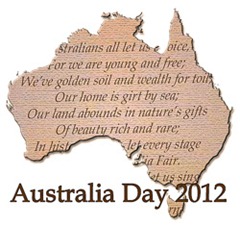
Australia Day 2012 – Wealth for Toil

Australia-day-logo-2012
26th January 2012

The Australia Day post is once again coordinated by Twigs of Yore. For details on how to participate click HERE.

John Hunt Butcher was born in Hascombe in rural Surrey in 1781. In 1808 in London, he married Sarah Burchell and they raised a family of four children, one daughter Sarah born in 1805 died in 1810. I had never pursued this line specifically, as I descended from the brother of John's Grandfather, Daniel Butcher. The name of Butcher is fairly common in my bit of Surrey and the family lines complex with wills and property. At some point there is a falling out between Daniel and his brother Richard from whom John Hunt Butcher descends. I knew at some point I would come back to John and for a little more than 15 years I didn't focus on this line. That is until two things happened....

The first was I went search The National Archive catalogue on line for the name of John Butcher. Quite without thinking I typed John Hunt Butcher. I was just about to hit the delete button when I glanced at the screen and saw a reference to Australia. I am sure that everything stopped around me. It was one of those moments when I had to pinch yourself to be sure of what you were reading. All researchers know that feeling....don't you?

So I shelved the research for John Butcher and focused on this John Hunt Butcher. What I read, made my head spin. The Butcher family had always held property and land. There are numerous documents in the Surrey Records Centre for property being purchased jointly between Richard Butcher and my several times Great Grandfather Daniel Butcher. Sometimes they sold the property, sometimes they sold to each other. It all gets very complicated. Some of the names I was reading both in terms of names of individuals and names of property were known to me. This was definitely my family, although not my direct line of descent. The documents in question seem to provide details of property and money between various people who descended from the Butcher family. I made a note of the extra details, even from the catalogue it provided some extra data, but there is still a need for the original documents to be sighted and copies purchased. I sat and wrote a long list.

I then turned to the biggest statement and question, followed by another question and then another. John Hunt Butcher migrated to Australia, where, when, why. My brain thought it was going to explode, and my poor hand could not write fast enough. The documents directed me to Lowlands near Richmond Van Dieman's Land (Tasmania). A search of The State Library of Tasmania directed me to a painting of Lowlands by Mary Allport (Allport Collection).
There was something very peaceful about the picture. It reminded me of early pictures that I had seen of the family home in Hascombe, called Park Hatch. How did he acquire the land?

The Colonial Secretary index revealed that the data had been transcribed as William Butcher, but does indicated that John Hunt Butcher was given 2,000 acres on 16th June 1824. Which probably explains where Lowlands was built; and it was probably built with a reminiscence of his home in Hascombe.

The second thing that happened, did so just before Christmas. I saw a posting on one of the Australian Rootsweb mailing lists. Did anyone descend from John Hunt Butcher? I emailed the enquirer. Whilst they did not descend from the line, there was an association between the researcher's family and wife of John Hunt Butcher, Sarah Burchell, who it would appear was the sister of William John Burchell, a well known Botanist. A further glance at the family tree reminded me that John Hunt's sister, Suskey had married a George Matthew Burchell who in turn was Sarah's brother. Was the Burchell's the reason for John Hunt applying for a land grant? It would appear that another brother of George Burchell's, Charles had applied for one in 1821, but had stopped in South Africa en route to see his brother William John and decided to stay there.

My research for this line is continuing and is very much a work in progress. I want to have a real understanding as to why John left England. What happened to his family once he was in Australia? From early research it appears that John himself was a Magistrate and at some point a branch of his family moves across to Western Australia. I am a long way, both in terms of understanding and research and in geographical terms. My quest is to get as much basic research done prior to my Australia trip later this year. 

Tuesday, 24 January 2012

Guest Post at Cozy in Texas

Anne at Cozy in Texas invited me to be a guest on her blog today.
You can read my Guest Post HERE

Tea Cup Tuesday - Total Eclipse August 1999

In my kitchen breakfast room I have a couple of beams. I can't recall exactly when, but at some point in the past we had hooks placed into the beams and then I have hung mugs and cups from them. So, over the coming weeks I will share with you those mugs.

The following is a commemorative mug, made locally to celebrate the Total Eclipse in August 1999. I can't remember where I purchased this, probably a local shop, long since closed. I do remember that I had had surgery about two weeks before and I had been very ill afterwards. I was trying very hard to be well enough to be discharged in order that I could view the Eclipse. As it happened I was discharged the day before. Hubby had to be encouraged to drive me to the sea front where we did manage to grab a reasonable spot and view. It was quite a peculiar feeling. The entire town became, almost a deathly quiet as everyone waited with anticipation of the sky getting darker and darker and darker. Then almost in a flash, started to get lighter and lighter. Quiet remarkable.


Taking part in Tea Cup Tuesday hosted by Artful Affirmations & Martha's Favourites

Sunday, 22 January 2012

21st Century Organised Family Historian - Week 4 - Set up a Work Area


Continuing the weekly theme organised by Michelle at The Turning of Generations.

I am very lucky. I have a whole room designated to my obsessions! The 4th bedroom in the house is at the top of the house. From this room we can access the attic area. The only problem is that there is not a huge amount of natural light, due to the design of the house.

This room houses all my genealogical material, photograph archive and most of my books, although I do actually have books in pretty much all the rooms, with the exception of the room my Mum uses when she comes to stay. There are also two huge filing cabinets, which contain most of the genealogical material, although the table which sits in front of the window in my study currently has a series of folders that I am currently clearing through. Incidentally, the table was my Grandmother's so I quite like to sit there and work. 

In my room there are two main work areas. My desk is actually a large table and houses my main desktop, our printer, scanner and copier and usually my laptop and telephone. Grandmother's table which is in front of the window I tend to use for my iPad with keyboard, or perhaps laptop if I don't need to be connected to the power source, or I can clear the table completely and use it for sorting, filing and being creative.

I would post a photograph or two, but not until I have reduced the chaos of books, files and papers to a more  organised feature! A former boss once told me that there were filer's and piler's. Guess what I am!

Sunday Salon - Just a few books....

 I think this is the first Sunday Salon I have taken part in since Christmas. Where does the time go?

Santa, also known as my beloved bought me a Kindle for Christmas. Which is pretty good for a man who refuses categorically to buy me books! So, I have been exploring the wonders and depths of Amazon and Smashwords for their e-books and in particular the free e-books. I have been alerted to some real wonders and new authors.

I spotted a new series by Barbara Sullivan. Unravelling Ada: A Quilted Mystery Novel, reviewed HERE and a second book in the series, Ripping Abigail, which is my current e-book read. I do hope there is going to be a third book.

Crime Fiction for BeginnersI have also reviewed two very different books - First this e-book Crime Fiction for Beginners by Gervase Shorter reviewed HERE and paperback - Masters: Art Quilts Volume 2 narrated by Martha Sielman; that review is HERE
Masters: Art Quilts, Vol. 2
I also caught up on a much over due review for the Federation of Family History Society's book club - Tracing Your Channel Island Ancestors. This was an informative read, not just in terms of genealogical information, but also the complexities of the administration of the Islands.

I have also delved into cookery e-books. Some are best viewed on my iPad, but that is about my preference as a reader. First up was Master Chef Tom's Burns Night by Tom Bridge. Burns night is of course just a few days away.

Just after Christmas stumbled across a rather interesting collection of Japanese Ukiyo prints by Daniel and Denise Ankele. Mainly prints of flowers, but there are a few views. A fascinating collection and of course best viewed on a colour viewer such as PC or iPad or alike.

Well, that it is it for another week. I am hoping this week to complete my current e-book read and crack on with a few reviews that I have agreed to do. So many books, so little time!

Saturday, 21 January 2012

Weekend Cooking - Burns Night!


As this is the last Weekend before 25th January, I thought that I would write about Burns Night. Last year I wrote a guest post over at Geneabloggers last year about Burns Night, explaining how it is celebrated, the poems and with what foods. I have also mentioned previously about a typical meal, in which the essential ingredients are Haggis, Potato and Suede or as they call it north of the border neep!

Haggis can be found in most super markets here in the UK. They are usually found on the fresh meat counters and can be frozen. I routinely have at least two in the freezer. They do need defrosting before cooking.

Haggis can be cooked on the hob, in a pan of boiled water. As soon as the water boils reduce the heat and add the Haggis, with the water simmering it takes around an hour. Haggis can also be cooked in the oven, remove from the plastic casing and wrap in tin foil. Place the Haggis into an oven proof dish with a little water and cook, usually for around an hour. If you cook via the microwave, I usually remove the outer plastic and skin, and don't forget the metal clips at the ends! Cut the Haggis into small segments and cook on full power. Length of time will vary depending on your microwave. 
Picture of ready cooked Haggis.

Haggis Pie

Cook Suede and Potatoes
Haggis cooked for about 3 minutes in the microwave (mine is 900w)
Cut Haggis into sections and place in bottom of a dish, I use a Lasagna dish
Mash Suede and place on top of Haggis
Mash potato and place on top of Suede.
Place in Oven for (mine is fan assisted) so 20 minutes until nice and brown.

Wee Beestie!

Cook Haggis and break into bits with a fork.
Serve on a bed of mashed potato and mashed suede (neep)
cover with cheese sauce and a light dusting of black pepper to taste


Master Chef Tom's Burns NightA nice, informative and easy to read book about a Burns Night Supper is Master Chef Tom's Burns Night


Robert Burns 1759 - 1796


And just to finish off, here is a picture of the man himself!

Weekend Cooking is hosted by BethFishReads

Master Chef Tom's Burns Night by Tom Bridge

Master Chef Tom's Burns Night

A great and easy to read book. It starts off with some details of the very first Burns Supper in 1801. Over the following 200 years the celebration of Burns Night is known the world over.

The book explains that Haggis is a cooked product and simply needs to be reheated, which can be done by steaming, boiling, oven heat and microwave.

Also provided is a traditional Burns Supper menu, which is hyper linked to photos or the recipe. There is some brief history to background of the dishes, the ingredients, the cooking method and chef's tips.

The book then finishes with a typical Burns Supper programme. Starting with Grace, Entrance of the Haggis, The Immortal Memory address, Toast to the Lassies and the subsequent reply, Tam O'Shanter, Music, Songs and Poems and then the closing address.

All in all, a nice little book with a mixture of the history of the event, recipes with photos and proceedings.

Sepia Saturday 109 - Dolls!

I thought I might struggle to find a suitable photo in the collection of photographs I have here, but as luck would have it!  

This is a photo of my Mum's 1st Cousin Janet Downes taken in Guildford Surrey circa 1945


My Mum has a wonderful bridesmaid doll which she was given as a present for Christmas when she was 10 years old. There are no old photos of the doll and I have managed to get a recent photograph taken. You can read about the doll HERE

Taking part in Sepia Saturday

Friday, 20 January 2012

52 Weeks of Abundant Genealogy - Week 3 - Free Online Genealogy Tools


 Week 3- Free Online Genealogy Tools - Free online genealogy tools are like gifts from above. Which one are you most thankful for? How has it helped your family history experience?

Challenge from Sunday 15th January 2012 - Saturday 21st January 2012

There are so many free on line genealogical tools, all provided by some very generous people within the genealogical community. Here are several of my favourite ones.

The Geelong and District Database is simply phenomenal. Over a million records, all provided free by fellow researchers. A real genealogical treasure, especially when I reside across the pond. Even if you do not have ancestors in the area go and have a look at the facilities.It is nothing short of fantastic! 


Postcard Friendship Friday - Old Tangley, Wonersh Circa 1908


Submitted as part of Postcard Friendship Friday hosted by The Best Hearts are Crunchy 


Thursday, 19 January 2012

Family History Writing Challenge - Reflections on the 2011 Challenge

I did take the 28 days pledge, the one that made last February the month for the Family History Writing Challenge. When I wrote the introductory post I talked about a set of notebooks that I had written over the last 20 years, written from visits to my Great Aunts and other relatives.

It occurs to me that I have not once looked at the notebooks that I mentioned in my 2011 introduction. The posts that have been written have been done so from my memory, recollections and my computer programme. I could not possibly remember all those dates!

The posts were made in an almost logical fashion. I started with my Grandmother and steadily worked backwards. There were the odd deviation and separate posting, written as the fancy took me!

By being able to write several thousand words without the notebooks makes me wonder what else there is to post. Actually the word count sits at 11,557 excluding the introductory post, which was 253 words and this post of somewhere in the region of 200 words. There are lots and lots and lots....you get the picture? What information do we each store in our memories? Things that will overtime be lost. Even my own Mum failed to remember something that she herself told me a few years ago.

I have an idea of what to do with the data collected and written about during February 2011. I also plan to add to those initial 28 a selection of other posts written during the year. I then plan to publish. Depending on how and what I write for the challenge this year they may, or may not be included.

What are your plans for the contents of the 2011 writing challenge?

Family History Writing Challenge 2012

Lynn Palermo over at The Armchair Genealogist blog has issued the Family History Writing Challenge and I've decided to accept. Here's the details from Lyn's page.


The Family History Writing Challenge
Feb 1st-29th
A 29-Day Commitment to Writing Your Family History

The What, When, Where and How of it All

Why should I sign up?
To actively participate in an opportunity to write your family history, without having to worry about quality. The key to writing is to write. Stop procrastinating; finally commit pen to paper or fingers to key board. Those family facts, finally assemble them into a format someone will read.

Whom Do I Write About?
A single ancestor, a surname, a branch of your tree, you pick.
You select the ancestor or ancestors, the timeframe, just keep in mind who you feel most prepared to write about in terms of research and interest.

How Much Do I Need to Write?
You pick the amount 250, 500, 1000 words a day whatever you can work into your schedule.
Do the math.
250 words x 28 days = 7000 words, you would be well on your way!
500 words x 28 days = 14,000 words, this would be an incredible start!
1000 words x 28 days = 28,000 words, you would be a hero!

Where Do I Write?
Write on your computer, ipad, typewriter, longhand (tough to do word count). Write in your office, at the kitchen table, the local coffee shop, the lawn chair (if your someplace sunny- lucky you), or beside a roaring fire (that would be me).

What If It’s Not Good Enough?
This exercise is not about quality. Very few of us can sit down and shoot out a masterpiece on the first draft. Newsbreak..... most of us take a half dozen passes at it before it is worthy of anyone else’s eyes. This is about making a start. There will be plenty of time to edit your masterpiece later, committing to the word count is a huge step to making it happen.

When Does it Begin?
The Family History Writing Challenge begins Feb 1st to February 29th. I am asking you to commit 29 days of writing your family history, in the hopes that you will get a running start and you will never look back.

Where Do I Sign Up?
Right here, leave your pledge in comments or link to your own blog post, no goal is official until you have written it down and shared it. Once you verbalize, you become more committed. If you prefer to keep it to yourself that's ok too. However, keep checking back or sign up through email, throughout the month, I will offer numerous posts to help keep you focused, offer you some tips for your writing and help you stay on track and reach your goals. At the end of the month, you can share how you did again here, or on your own blog.

What is stopping you from starting your writing? Let me know, and I will try to help you overcome those obstacles. Meanwhile, you have the next 2 days to get yourself organized to start writing.

Write your family history in 29 days, are you ready to take the challenge?

I've signed up again this year. The commitment is to again write 250 words each day because even though many of my posts run longer than that, 250 words is easy enough to do and doesn't put too much pressure on me. So, where to start? I am going to reflect over the posts for 2011, and see if there is anything that I would especially like to follow. Otherwise, I may be a bit more random this year. Who knows!

How about you? Take the challenge! It might be the impetus you need to get some of that family history written that you've wanted to start! 


Follow The Family History Writing Challenge Blog HERE and to take part sign up HERE

Twitter tag - #FHWC

Tuesday, 17 January 2012

Tea Cup Tuesday - Santa's Around the World

A few weeks ago I wrote my collection of Spode Santa mugs. You can read about that HERE. As I said in that post I was missing two from the set; Santa's of Germany and Russia. I was delighted then to see for sale, via a well known site a lovely example of the German mug. So made my bid and awaited, fingers crossed for the auction to finish.

Last week the mug made it across the Atlantic. Isn't it lovely?


Just need to locate a Russian Santa, and I will have a full set!

Taking part in Tea Cup Tuesday hosted by Artful Affirmations & Martha's Favourites

Monday, 16 January 2012

21st Century Organised Family Historian - Week 3 - Process Photos & Files

Continuing the weekly thread organised by Michelle at The Turning of Generations

Being of slightly obsessive disposition, I do keep numerous backups and updates. The reason for this obsession is that I learn't the hard way!

As soon as I have taken a series of photos they are backed up to my external hard drive, each with a clear named folder. They are then added to Flickr, with again clear titles. Any photos that I want to remain private are flagged accordingly. I also make a CD of specific photographs - such as holidays or trips away.
Photos taken with my iPhone are imported into my laptop and the folder marked with the date and a one word description for example - 2011-13-07 - Jersey. At the end of every month I back up the months files to my external hard drive and then start the whole process again.

Going forward, I plan to remain making a back up via external hard drive, CD and Flickr. What I do need to do is to start going back through the external hard drive moving the genealogical photos into the surname folders. I do have a master folder on the external hard drive of all our old family photos.

I also need to continue digitalising the photographs we have. We currently have three huge plastic crates in the loft area. Each paper envelope is named (either my initials or hubby) and a date, especially the ones that relate to our lives before we married. For example I have loads of my time in Australia in the early 1990s and hubby has lots from his time in the Navy. I also have rather a lot of cemetery photographs. Some for individuals that are known to be related, others taken because they might be!

I do have a scanner, but am seriously considering purchasing a Flip Pal Scanner, which is not readily available here in the UK. Even Amazon directs the search to their US site.

Sunday, 15 January 2012

Masters: Art Quilts, Vol. 2 Curated by Martha Sielman

Masters: Art Quilts, Vol. 2

Published by Lark Crafts September 2011. ISBN - 978-1-60059-599-8. Curated by Martha Sielman.

This is a beautiful collection of photographs illustrating the amazing talent by 40 creators across the globe. As I sat and viewed each picture I had to really remind myself that this was not simply a painting that had been photographed for the purpose of the publication. Each one was a quilt that had been made to produce the overall effect. This is truly a collection of works by some very talented individuals.

Each chapter starts with some details of the artist involved. The pages that follow are filled with wonderful examples of that individuals work. Beneath each illustration is the sizes of the original, along with the materials used to create what can only be described as a work of art. 

The collections within the book are truly inspirational.

Small print - I received a copy from the publisher. I was not paid for the review and the review is my genuine opinion of the book.

Weekend Cooking - Bread


I have a bread maker, although it rarely sees the light of day and lives in the kitchen in a rather over crowded cupboard. Before Christmas you may remember I wrote about a programme called The Big Bread Experiment. Inspired by the programme, I made a conscious effort to make some bread using the said machine.

I limped around Sainsburys and purchased some yeast and a few bags of strong white flour. Then one day while Stuart was working, I decided to make some bread. Now, I am not able to stand or sit for huge periods of time due to my sciatica. The bread maker was the perfect assistant. It took about 10 minutes to read the recipe, gather the ingredients and a further 10 minutes to add the ingredients to the machine and set the timer.

After a couple of hours I heard the timer and descended the stairs, excited to see the bread. Well, all I will say is that England could have used the bread for the next test match. It was absolutely and completely rock hard. I checked the recipe. All was OK there. I then spotted the bread flour, recently purchased for the event completely unopened. What had I used? I checked the cupboard and finally the bin and there spotted an empty bag of flour that I have meant to throw away, as I had had it a few years. I checked the expiry date. I am embarrassed to confess the expiry was August 2000. As you may deduce, I don't make much bread.

I have not baked any bread since, but have stumbled across a couple of eBooks via Amazon on baking bread.


Easy, Fabulous Bread Making: A collection of quick, no-knead, homemade bread recipes30 Easy flavoured Bread popular recipes

Weekend Cooking is hosted by BethFishReads

Saturday, 14 January 2012

21st Century Organised Family Historian - Week 2 - Develop a Digital Organizational Scheme

Continuing the weekly thread organised by Michelle at The Turning of Generations.

I knew last week that this was going to be a bit of an ordeal. My Maternal ancestry had lived in the area of the Surrey, Sussex and Hampshire borders for around 300 years. It is therefore hardly surprising that I have a duplications of surnames. Not surprising, but very frustrating. In some cases the lines are not know to be connected and in other cases there is an overlap of families. My own Grandparents were 6th Cousins, although they did not know it during there lifetimes. I often wonder what they would have made of that fact. 

My rather ageing genealogical programme is Family Origins 10. There will be an upgrade later this year I am sure. The name of my database MainFile. It starts with me and works back across my own ancestry and then goes sideways into my marriage and then heads back through my husband's ancestry.

I have a series of ring binders that reflect the computer database of MainFile. In theory, if the details exist in my database then a paper copy exists in my paper file. My filing cabinet has a file for each of my surnames running A-Z. If there is a great deal on a particular individual they have their own file inside that.

Meanwhile, my external hard drive is in deep, deep need of being organised. The plan that I have thought about over the last week is hopefully going to work. It will look like this:

External Hard Drive

- Genealogy

--JDG (me)
---Surnames (showing a few examples)
----Ayling
----Butcher
------John Hunt Butcher
----Budd
----Bellasis
----Bowring


Within each surname folder is a series of folders like this - 
--Butcher
---Census
---Migration
---Photographs (all named and dated)


This structure, repeated for my husband's ancestry.

That is my vision for the project. Fingers crossed it will work and will make a huge difference to the current organisation.

Orlando Cherry Brandy


The story behind these little pots is quite interesting.

I inherited a plate from my Grandmother with a very similar patten on it. The design was by the artist, Wattau.

So, in my search to see if there were any other similar plates I came across one of these little pots. On the back is the details of Orlando Cherry Brandy, Aidee liqueurs, Torquay. Interesting, as the name of Orlando appears in my Italian ancestry, I simply had to buy the little pot. Then I bought another, and another.....
I actually do not live too far from Torquay, so I set about to research a little about the business, that closed long ago.

Sepia Saturday 108 - Hats!

The moment I saw the photo prompt I knew the photograph I wanted to use. It was just a shame that I could not lay my hands on it! Instead, I came across the following two photos which really show the character of my Grandfather.

Taken at Peel Avenue, Shoeburyness when my Grandfather was visiting his sister and her husband and was taken during the period of 1952-1957


On this second photo clearly there was no hats available! 

We have had trouble dating the photo. Mum thinks it is prior to her being born in 1947. This is a sepia photograph compared to the one above which is black and white. Others that are also sepia show my Grandparents in the garden of the house that they lived in from 1940. My Grandfather didn't join the Army until the Autumn of 1940. Of course post 1939 the beaches on the South coast were heavily defended. I think this is just pre war. Is this the Summer of 1939? which would make this just before they married, (they married in November 1939). The venue is possibly Shoeburyness. Whilst Brighton was a favourite seaside venue the beach is too pebbly! 

Taking part in Sepia Saturday

Friday, 13 January 2012

52 Weeks of Abundant Genealogy - Week 2 - Paid Online Genealogy Tools


Week Two - Which paid genealogical tool do you appreciate the most? What special features put it at the top of your list? How can it help others with their genealogical research?

Challenge open Sunday 8th January to Saturday 14th January 2012

I have several paid genealogical subscriptions. The one I probably value the most is my World Membership to Ancestry  - probably seen by some as expensive at £155 a year, it enables to me to research an abundance of genealogical records across the world. I have research in Australia, USA, Canada, India, Italy and New Zealand. Whilst some of those Countries have limited access at the moment - such as Italy, I more than make up for the lack of use in that area in other areas, such as the US material. 

Not to mention the value for money in reduced transportation costs. The latest quote for a flight to Sydney for example is around £950, where as this way I can at least do some research on line. There is a trade off. I would rather go to the archive and look at the original document with my own eyes. However, that is not always an option, in terms of costs, time and domestics.

Out of interest, a fellow researcher in the US tells me that she routinely renews her Ancestry subscription using the UK site because of the exchange rate.

I also have a paid subscription to the following UK:
I also belong to a few Family History Societies. Some have placed huge amounts of data at the disposal of their members - these are the one that do, that I am a member of
I also have used Footnote, now Fold3. Mainly on a pay as you go system, when I want a specific document. One of which was a Naturalisation Record for my husband's Great Grandmother.  Another site that offers data on line for purchase is The National Archives. I have had some real success with purchasing military records and early wills.

They key thing is that the majority of these sites offer different things. Each researcher will require something a little different based upon how they research their ancestral roots. Do they simply go backwards or do they perhaps research the families of their ancestry backwards and sideways and research siblings of ancestors.

What is clear, is that however  and whoever we research, we will all have our favourite sites, those what we feel we get the most value for money from. I guess it is a case of one size does not fit all!

Postcard Friendship Friday - Rowley Bristow Orthopedic Hospital Surrey


Here is Rowley Bristow Orthopedic Hospital at Pyrford. This card is from July 1954, which was the same time my Mum was a patient there.


Submitted as part of Postcard Friendship Friday hosted by The Best Hearts are Crunchy 


Thursday, 12 January 2012

Unraveling Ada, a Quilted Mystery novel by Barbara Sullivan

Unraveling Ada, a Quilted Mystery novel

I was delighted when I spotted via Amazon just before Christmas. I had high hopes for the book and I wasn't disappointed. In fact I was only about a third of the way through the book when I checked if there was another in the series, which there was!

The series, opens with the introduction of the narrator Rachel, who with her husband Matt run a private investigator business. Rachel has a background in libraries and is a quilter looking for a regular American  style quilting bee. Matt is an former military man. They are pretty much the business, although they do have a small team of employee who help them complete the various contracts.

Having looked for a quilting bee without success, the participants in one contact Rachel and invite her to join. Rachel does and is somewhat bewildered with the other members. Each one seems to have a story to tell and one to hide. By the end of the first evening, a member of the group ask Rachel if they can employer her to do some investigations. Rachel, agrees and leaves the quilting be clutching a diary,quilt, a family tree and lots and lots of questions....

The story that unfolds is not complex, but it is a story with lots of strands, much like the strands holding a quilt together. The strands come together, which culminates with Rachel being threatened. Her investigations are getting close to the truth......and generations of secrets are about to be told.

I loved this book. It has everything that I love, characters that felt like they were having a conversation with me, a good storyline and a complex genealogy. 

I am currently reading the second book in the series and I hope there is more in the series to come.

Tracing Your Channel Island Ancestors by Marie-Louise Backhurst

Product Details

Published as part of the, Tracing Your Ancestor Series. This volume contains a wealth of information within its 186 pages. Written in a clear, easy to read format with photographic illustrations and a concise index. The book itself is divided into 5 chapters. 

Chapter one Internet resources and sources located outside of the Islands. Chapter two covers Jersey. Chapter three covers Guernsey, Herm and the less well known island of Jethou. Chapter four covers Alderney, and chapter five Sark. There is also a listing of Family History Societies, libraries and archives for the Islands.

Each chapter commences with a general discription of the georgraphy, history and the administration of the relevant Island. Followed by, a comprehensive look at the civil records, Church Registers and Surnames and Cemeteries. Also covered are property and other official records, military and migration, education, employment and crime.

I recommend this as a valuable text to anyone researching their Channel Island ancestry. It would make a useful addition to a genealogical library or for anyone who has an interest in the Islands.

Book Review for Federation of Family History Societies book club November 2011

Japanese Ukiyo-e Floral Prints by Daniel & Denise Ankele

Japanese Ukiyo-e Floral Prints

This is an eBook that I spotted via Amazon just after Christmas. I downloaded to my iPad and Kindle and viewed on my iPad as the Kindle is not in colour. At the time I downloaded, this was a free book.

This is a beautiful collection of floral prints from 1868 - 1912. The collection does contain a few landscapes, but in the main most are of flowers. This is a purely visual experience.

The Hibiscus by Mrs Bellasis circa 1802
One of the things that did intrigue me was the picture of the Hibiscus plant - a lovely vibrant picture. 

As readers may recall I came across a picture in the Mitchell Library, State Library for New South Wales that was drawn by my ancestor - Mrs Bellasis circa 1802 - 1803. You can read about that HERE

This made me wonder, just how the flower came to be in Australia? Or was it something that Mrs Bellasis drew from an early book?


Linkwithin

Related Posts Plugin for WordPress, Blogger...